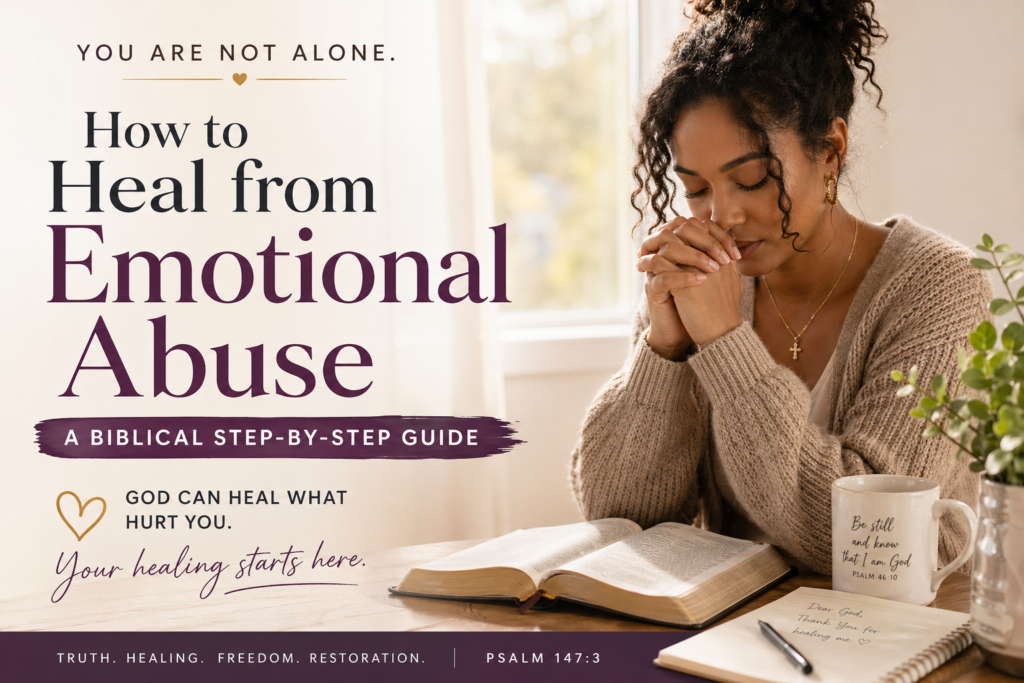
Introduction: When the Pain Is Real but Invisible
Emotional abuse is one of the most confusing forms of pain a person can experience. There are no visible bruises, yet something inside you feels broken. Words, silence, manipulation, and control can slowly wear down your confidence, your sense of identity, and even your ability to trust yourself.
Many people carry this quietly. You may look strong on the outside, but inside you feel drained, unsure, or stuck.
If that is where you are, I want you to know something clearly: what you experienced matters, and your healing matters to God. Scripture tells us that He “heals the brokenhearted and binds up their wounds” (Psalm 147:3). That promise includes you.
Healing is possible, and it can begin today.
What Emotional Abuse Really Is
Emotional abuse is not always loud or obvious. It often shows up in patterns such as:
- Constant criticism or belittling
- Manipulation or gaslighting
- Withholding affection or communication
- Control over your decisions or thoughts
- Making you feel responsible for someone else’s behavior
Over time, this kind of treatment can affect how you see yourself. You may begin to question your worth, your judgment, or even your identity.
God did not create you to live under that kind of weight. He created you with dignity, value, and purpose.
Step 1: Acknowledge What Happened Honestly
Healing begins with truth.
Many survivors minimize their experience. You may find yourself thinking, “Maybe it wasn’t that bad,” or “Maybe I’m overreacting.” But minimizing delays healing.
Acknowledging what happened does not make you bitter. It makes you honest. And honesty is the foundation of freedom.
You can say, “What I experienced was harmful, and it affected me.” That is not weakness. That is clarity.
Step 2: Bring Your Pain to God Without Pretending
You do not have to hide your emotions from God. He already knows how you feel, and He invites you to come as you are.
You can speak to Him in simple, honest words:
“Lord, I feel hurt. I feel confused. I don’t understand everything I went through, but I need Your help to heal.”
The Bible is full of people who spoke to God from places of pain. God did not reject them; He met them.
Healing begins when you stop pretending and start connecting.
Step 3: Renew Your Mind with Truth
Emotional abuse often plants false beliefs deep in your mind. Over time, you may begin to believe things like:
- “I am not good enough”
- “Everything is my fault”
- “I will never change”
These are not truths. They are wounds speaking.
Romans 12:2 teaches that transformation happens through the renewing of the mind. This means you intentionally replace lies with what God says about you.
According to Scripture:
- You are created in God’s image
- You are loved
- You are chosen
- You are not defined by what was done to you
Renewing your mind is a process, but it is one of the most important parts of healing.
Step 4: Break Unhealthy Emotional and Spiritual Attachments
In many cases, emotional abuse creates strong internal attachments. Even after the situation has ended, you may still feel connected, controlled, or emotionally tied.
This is not something to feel ashamed of. It is something to address.
Prayer becomes important here. You can ask God to help you release every unhealthy connection and restore your emotional freedom.
This step is not about forgetting the past. It is about no longer being controlled by it.
Step 5: Rebuild Your Identity in Christ
One of the deepest effects of emotional abuse is identity damage. It can cause you to forget who you are.
Healing involves rediscovering your identity, not through what people said or did, but through what God says.
Your identity is not:
- The words spoken over you
- The way you were treated
- The mistakes you made while trying to survive
Your identity is rooted in Christ.
As you grow in this understanding, you will begin to see yourself differently. You will make decisions differently. You will carry yourself differently.
Step 6: Be Patient with Your Healing Process
Healing does not happen all at once. It happens in stages.
There may be days when you feel strong and clear, and other days when memories or emotions return. This does not mean you are going backward. It means your heart is processing and releasing what it has carried.
Give yourself permission to heal at a healthy pace.
God is not rushing you. He is walking with you.
Step 7: Step Forward into a New Way of Living
Healing is not only about recovering from the past. It is about moving forward with new strength, new understanding, and new boundaries.
As you heal, you will begin to:
- Recognize what is healthy and what is not
- Set boundaries without guilt
- Trust God with your future
- Walk in greater confidence and peace
Freedom is not just leaving what hurt you. It is learning how to live differently moving forward.
If You Need Deeper Help
Sometimes healing requires more than a single moment of prayer or understanding. It requires guidance, structure, and intentional steps.
If you feel like you need support as you walk through this process, these resources can help you go deeper:
- Deliverance From Abuse – For Survivors of Emotional, Physical, sexual and spiritual Abuse
This resource provides practical, faith-based steps and prayers to help you break free from the effects of abuse.Shop - How to Recover from Narcissistic Trauma and Reclaim Your Power
This focuses on rebuilding confidence, clarity, and emotional strength after manipulation and control.Shop - Deliverance From Trauma Captivity – Shock, Pain, Domestic Violence, ChildhoodShop
This goes deeper into healing trauma stored in the mind and emotions, helping you move toward complete restoration.
Final Encouragement
Healing from emotional abuse is not a quick process, but it is a real one.
You are not defined by what you went through. You are not disqualified because of what happened. And you are not alone in your healing journey.
God sees you clearly. He understands your pain fully. And He is able to restore what was broken.
Take this one step at a time. Stay consistent. Stay open. And trust that healing is not just possible—it is already beginning.